
For many Christian parents, choosing a school is about more than academics. It is about finding an environment that supports the values taught at home and reinforces a biblical foundation during some of the most formative years of a child’s life.
At the same time, parents want confidence that their children are receiving a strong education that prepares them for future success. This often leads to an important question: Can a school provide both academic excellence and meaningful spiritual formation?
The answer lies in faith integrated academics.
A common misconception is that Christian schools simply add Bible classes, chapel services, and prayer to a traditional curriculum. While those elements are important, true faith integration goes much deeper. It shapes how every subject is taught, how students understand the world, and how they develop wisdom and discernment.
At StoneBridge School, faith integrated academics are woven throughout the educational experience. Through the Biblical approach, students learn to view every academic discipline through the lens of biblical truth while receiving a rigorous college-preparatory education.
The goal of faith integrated academics is not only to help students succeed academically but also to equip them to think biblically, live faithfully, and serve purposefully.
What Does Faith Integration Mean?

Faith integrated education is the intentional connection of biblical truth to every area of learning. Rather than treating faith as a separate subject, Christian educators help students understand how God’s truth relates to history, science, literature, mathematics, and every aspect of life.
More Than Bible Class and Chapel
Bible classes, prayer, and chapel services play an important role in Christian education. However, faith integrated academics extends far beyond these activities.
Students learn that Scripture provides a framework for understanding the world around them.
As they study academic subjects, they’re encouraged to ask about what God’s Word reveals about a topic; how the subject reflects God’s character and design; and what responsibilities as Christians do we have in light of what we’re learning?
This approach helps students see that faith is not limited to Sunday worship or devotional time. Instead, faith becomes part of how they think, learn, and make decisions every day.
Why Education Is Never Neutral
Every educational system teaches from a particular worldview. The curriculum selected, the values emphasized, and the assumptions presented all influence how students understand truth and reality.
Christian education recognizes that learning is never value-neutral. Rather than separating faith from academics, it acknowledges that biblical truth provides a reliable foundation for understanding the world.
For parents concerned about competing cultural messages, this approach offers consistency between what children learn at home, at church, and in the classroom.
How Faith Is Integrated Into Every Subject
One of the defining characteristics of a Christian school curriculum is that biblical truth informs every area of study. Students are encouraged to see connections between their faith and their academic learning.
History Through God’s Sovereignty
History becomes more than a collection of dates and events. Students examine how God’s providence and human choices have shaped civilizations throughout time. They learn to evaluate historical events through a biblical worldview while considering themes such as leadership, justice, freedom, responsibility, and the consequences of moral decisions.
This perspective helps students understand that history is ultimately part of God’s unfolding plan and that individuals have the opportunity to influence their generation for His purposes.
Science as the Study of God’s Creation
Science offers countless opportunities to explore the order, complexity, and beauty of God’s creation. Students investigate scientific principles, conduct experiments, and develop critical thinking skills while recognizing that creation reflects the wisdom and power of its Creator.
Faith integration doesn’t diminish scientific inquiry. Instead, it encourages students to approach discovery with curiosity, humility, and wonder. They learn that studying the natural world can deepen their appreciation for God’s design and inspire responsible stewardship.
Literature and the Human Condition
Stories have the power to shape how students understand themselves and others. Through literature, students encounter themes such as courage, sacrifice, redemption, temptation, and forgiveness. Christian educators help students evaluate these themes through the lens of Scripture.
Rather than accepting every message presented in a text, students learn to think critically, identify underlying worldviews, and compare ideas against biblical truth. This skill becomes increasingly valuable as they engage with a complex and often conflicting culture.
Mathematics and the Order of Creation
Mathematics reveals consistency, logic, and order within the world God created. As students solve problems and develop analytical skills, they gain a deeper appreciation for the reliability and structure built into creation. Mathematical concepts reinforce the idea that God is a God of order rather than confusion.
This perspective helps students see that even subjects often considered purely technical can point to deeper truths about God’s character and design.
A Biblically Principled Approach at StoneBridge
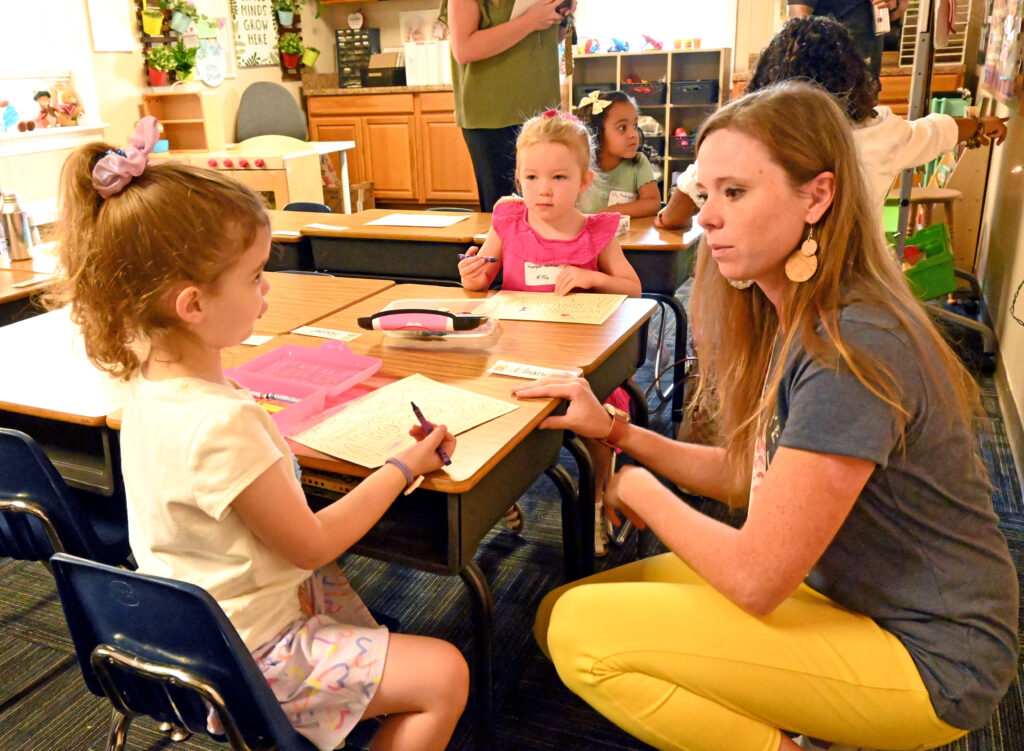
While many private Christian schools speak about faith integration, StoneBridge School uses a specific Biblically principled approach. This educational model intentionally connects biblical principles to every academic discipline, helping students understand how God’s truth applies to all areas of life.
Connecting Scripture to Every Discipline
This approach encourages students to identify foundational biblical truths that relate to what they are studying. Whether examining historical events, scientific discoveries, literary works, or mathematical concepts, students learn to ask how Scripture informs their understanding.
This method creates a cohesive educational experience where faith and learning work together rather than existing as separate pursuits. For families seeking a school that consistently integrates biblical truth throughout the curriculum, this approach provides clarity and purpose in every classroom.
Building Wisdom, Not Just Knowledge
Academic achievement is important, but knowledge alone isn’t enough. Students also need wisdom, discernment, and character to navigate the challenges they will face throughout life.
Our approach helps students develop these qualities by encouraging them to apply biblical truth to real-world situations. As a result, they learn not only what to think but also how to think biblically.
This focus supports the development of Christian character alongside academic growth, preparing students to lead faithfully in their future careers, communities, churches, and families.
Can a Christian School Still Provide Academic Excellence?
One of the most common concerns parents have is whether faith-based education can match the academic rigor of other educational options. The reality is that strong Christian school academics and faith integration aren’t competing priorities.
The Myth of Choosing Between Faith and Academics
Some families assume they must choose between a challenging academic experience and a spiritually supportive environment. This misconception overlooks the fact that Christian education has a long tradition of intellectual excellence. Many of history’s greatest thinkers pursued knowledge because they believed truth ultimately points back to God.
At StoneBridge, students are challenged to develop strong critical thinking, communication, and problem-solving skills while remaining grounded in biblical truth. Faith integration enhances academic learning because it encourages students to explore deeper questions, evaluate ideas thoughtfully, and pursue truth with confidence.
Preparing Students for College and Life
Academic preparation remains a core part of StoneBridge’s mission. With more than 40 years of serving Christian families and a 99% college attendance rate, StoneBridge demonstrates that faith-centered education can produce strong academic outcomes.
Students benefit from a college-preparatory curriculum designed to equip them for future success while maintaining a biblical worldview. The goal isn’t simply college admission. The goal is preparing students to thrive academically, spiritually, and personally throughout their lives.
Ready to see how faith and academic excellence work together? Schedule a tour to experience StoneBridge’s approach firsthand.
Why Parent Partnership Matters
Education is most effective when schools and families work together.
Reinforcing Truth at Home and School
Parents play a primary role in shaping their children’s beliefs and values. Christian education works best when the lessons taught in the classroom reinforce what students are learning at home and through their church community.
StoneBridge values this partnership by maintaining open communication, providing curriculum transparency, and inviting parents to participate actively in school life.This alignment helps create consistency for students as they grow academically and spiritually.
A Community Committed to Student Growth
Christian education extends beyond textbooks and assignments. Students benefit from relationships with teachers, administrators, and peers who share a commitment to biblical truth and personal growth.
This supportive community encourages accountability, character development, and meaningful connections that can influence students for years to come. For many families, this sense of shared purpose becomes one of the most valuable aspects of the Christian school experience.
The Lasting Impact of Faith-Integrated Education
The benefits of faith integrated education extend far beyond graduation. Students leave with academic skills that prepare them for college and future careers.
More importantly, they develop a biblical framework for making decisions, evaluating ideas, and engaging the world around them. They learn that faith is not something to compartmentalize but something that shapes every area of life.
When faith and learning grow together, students gain confidence in what they believe and why they believe it. They become better equipped to navigate challenges, contribute positively to their communities, and pursue God’s calling with conviction.
For Christian parents seeking an education that supports both intellectual growth and spiritual formation, faith integration offers a powerful alternative to the idea that these goals must compete.
At StoneBridge School, the commitment to biblical truth and academic excellence has guided students for more than four decades. Through a strong parent partnerships and a proven college-preparatory curriculum, students are equipped to flourish both now and in the future.
Learn more about academics at Stonebridge to discover how we help students grow in faith, character, and academic strength.
Frequently Asked Questions
How is faith integrated into academics at a Christian school?
Faith is integrated by connecting biblical truth to every subject, helping students understand how Scripture relates to history, science, literature, mathematics, and everyday life.
What is a faith-integrated education?
Faith integrated education intentionally combines academic learning with a biblical worldview so students develop both intellectual knowledge and spiritual understanding.
Can Christian schools provide strong academic preparation?
Yes. Many Christian schools offer rigorous college-preparatory programs while maintaining a strong commitment to biblical truth and character development.
Why do parents choose Christian education?
Many parents choose Christian education because they want an environment that reinforces their faith, supports strong academics, encourages character development, and aligns with the values taught at home.