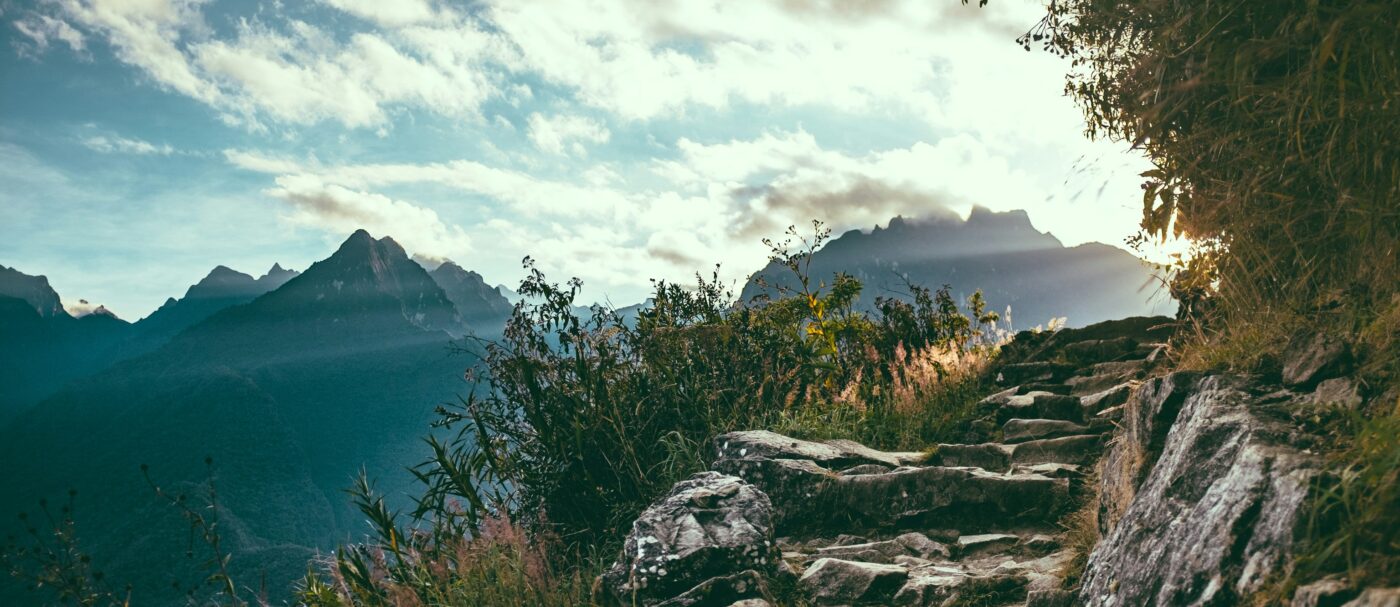
There is a moment—fleeting, luminous, almost sacred—when the climber reaches the summit. The air is thin, the horizon stretches endlessly, and the labor of the ascent gives way to clarity. The world below appears small, ordered, even conquered. In that moment, every voice around us seems to whisper the same conclusion: You have arrived.
But the Christian must learn to hear differently.
For the follower of Christ, the summit is never the end. It is not arrival, it is revelation. It is here, above the noise and the striving, that we begin to see clearly. Not merely the landscape of the world, but the landscape of our calling.
The summit does not crown us; it commissions us. It strips away illusion and replaces it with vision. And what it reveals is not a life of self-preservation, but a path marked by surrender.
The Temptation to Stay
Scripture gives us a picture of this moment in Matthew 17, at the Transfiguration. Christ is revealed in glory. The veil is pulled back. The disciples see, perhaps for the first time, the fullness of who He is.
And what is their instinct? “Lord, it is good for us to be here. If you wish, I will put up three shelters…” They want to stay. They want to build something permanent out of a temporary revelation. They want to preserve the moment, to hold onto the clarity, to avoid what lies ahead.
It is an understandable impulse. Who would not want to remain in the presence of glory? But Jesus does not allow it. He leads them down the mountain, and it is no coincidence that from this point forward, the Gospel narrative turns with increasing clarity toward Jerusalem, toward suffering, toward rejection, toward the cross.
The summit was not the destination. It was preparation.
The Joy Beyond the Summit
The path Christ walks from that mountain has a name: Via Dolorosa—the way of sorrows. It is a road marked not by triumph as the world defines it, but by sacrifice. And yet, Scripture gives us a profound and almost paradoxical insight: “For the joy set before Him, He endured the cross…” (Hebrews 12:2)
What joy could possibly undergird such suffering? It was the joy of pleasing the Father. The joy of obedience. The joy of redemption. The joy of seeing sons and daughters brought into glory. Christ did not endure the cross because He minimized its pain. He endured it because He saw beyond it.
This is what the summit gives us—a glimpse beyond.
A Different Vision and A Haunting Contrast
The world teaches us that the summit is where we secure ourselves. Where we protect what we have gained. Where we ensure that our suffering has resulted in personal advancement. Conversely, the Christian, standing at the summit, begins to see something altogether different. He sees the valley. He sees those still climbing. Those who have fallen. Those who have no strength left to ascend.
In that moment, the question shifts from “What have I gained?” to “What is required of me?”
In 1993, during a devastating famine in Sudan, photojournalist Kevin Carter captured an image that would shake the world. A small, emaciated child collapsed on the ground, struggling toward a feeding center. Behind the child, a vulture waited. Around this same time, I was beginning my Christian journey and walk with Christ. I was very interested in photojournalism and fascinated by how an image could convey deep insight into the human condition.
This photograph has been forever embedded in my memory; it went on to win the Pulitzer Prize. It was hailed as powerful, raw, and unforgettable, but the image carried more than recognition; it carried weight. Carter was haunted by what he had seen. Haunted, many believe, not only by the suffering itself, but by the role he played in it.
He had captured the moment. He had revealed it to the world. But he had not intervened. Within a year, he took his own life.
The Burden of the Summit Without Redemption
There is something profoundly instructive in this story. Carter reached a kind of summit. His work was recognized at the highest level. His name became known. His image changed the way people saw suffering, and yet, the summit did not bring peace.
Why?
Because the summit, apart from Christ, only magnifies what lies within. It amplifies the questions we cannot escape. It sharpens the tension between what we have done and what we ought to have done.
The world’s summit says, “You have succeeded,” but the soul may still whisper, “You have not loved.” Recognition without redemption is a fragile reward.
The Call to Descend
The Christian summit experience leads us somewhere very different. It does not leave us gazing outward in detached observation. It draws us downward, in compassion, in action, in sacrifice. Philippians 2 reminds us: “Do nothing out of selfish ambition or vain conceit. Rather, in humility value others above yourselves…”
This is not natural. It is not intuitive. It is the fruit of a transformed vision. When we have seen Christ, truly seen Him, we cannot remain the same. The One who had every right to remain in glory chose instead to descend into suffering. Not as a spectator, but as a Savior. He did not merely document our condition. He entered into it.
If the summit represents the pinnacle of the Christian experience, then we must be honest about its cost. Jesus makes no attempt to soften it: “Whoever wants to be my disciple must deny themselves and take up their cross and follow me” (Matthew 16:24).
This is not metaphorical language designed to inspire. It is a literal reorientation of life. To follow Christ is to die to self. To lay down ambition as the world defines it. To relinquish control. To embrace a life poured out for others. Yet, it is here, paradoxically, that life is truly found.
From Observation to Participation
The difference between the world’s summit and the Christian summit can be summed up in a single shift: From observation to participation. The world stands at a distance, capturing, analyzing, and sometimes even profiting from the brokenness it sees.
The Christian moves toward it. Not recklessly, not without wisdom, but with a willingness to bear the cost of love. To enter into the messiness of human need. To extend grace where it is undeserved. To lift when it would be easier to pass by.
At StoneBridge, we often speak of being a “city on a hill.” It is a fitting image for a summit community, but we must be careful to understand what that means. A city on a hill is not elevated for admiration. It is elevated for illumination. Its purpose is not to draw attention to itself, but to point beyond itself, to Christ.
How does it do this? Not merely through excellence. Not merely through achievement, but through love that is visible. Sacrifice that is tangible. Faith that is lived out in the everyday descent into the needs of others.
The Invitation
The summit experience is a gift. It clarifies. It strengthens. It reveals, but it also invites. It invites us to count the cost. To look honestly at what it means to follow Christ, not in theory, but in practice. It asks us:
Will you stay, or will you go?
Will you preserve yourself, or will you pour yourself out?
Will you observe, or will you act?
Christ has already answered. “For the joy set before Him…”
The Final Ascent

There is, of course, a final summit. A day when faith becomes sight. When the struggle of the climb gives way to eternal rest. When, as Scripture promises, “we shall be like Him, for we shall see Him as He is.” Until that day, every summit we experience here is provisional, temporary, and preparatory. Each one equips us not to remain, but to descend again with greater clarity, deeper compassion, and a renewed commitment to the call of Christ.
To deny ourselves.
To take up our cross.
To follow Him.
In doing so, to guide others, not merely to a higher place in this world, but to the only summit that truly satisfies. The presence of Christ Himself, who alone says, “Come to me, all who are weary and burdened, and I will give you rest.”